
This page provides historical context, methodological background, and citation guidance for measures used in HVS Image behavioral analysis.
Latency in Morris Water Maze Analysis – Citation and Background
See the main latency page for a full explanation of how latency is used and interpreted in Morris water maze analysis.
Origins of latency in the Morris water maze
Escape latency has been a central outcome measure in Morris water maze research since the introduction of the water maze by Richard Morris in the early 1980s. In these early experiments, latency was measured manually using stopwatch-based timing and served as a primary index of spatial learning and memory in rodent models.
Latency measurement using HVS Image systems was first implemented in early video tracking hardware developed for Richard Morris’s water maze experiments in the early 1980s and has since evolved into fully integrated, software-based analysis with synchronised positional tracking.
Evolution of measurement and sources of error
Manual timing methods introduced both random and systematic observational error, varying between experimenters and laboratories.
The transition to automated video tracking systems improved consistency, but differences in timing implementation introduced additional considerations. In particular, software-reported timing precision does not always correspond to true temporal accuracy of behavioral events.
Potential sources of variability in latency measurement include:
- premature trial initiation (e.g. timing triggered before full subject release)
- inconsistent or subjective definition of platform arrival
- variability in endpoint determination between operators or systems
These factors can influence reported latency values and contribute to reduced reproducibility if not controlled.
Standardisation in HVS Image systems
HVS Image tracking systems were developed in parallel with early Morris water maze research and introduced objective, position-based timing using video tracking.
Early HVS Image systems addressed timing accuracy using hardware timing control, including crystal-oscillator-based measurement in the VP110 system. This avoided the observational error associated with manual stopwatch timing and reduced dependence on less reliable software timing approaches.
Later generic PC-based systems often reported millisecond precision based on software timing units, but this did not necessarily guarantee millisecond accuracy. HVS Image systems addressed this by validating timing against hardware-based marker measurements and synchronising timing with positional tracking data.
These systems address known sources of variability through:
- controlled trial initiation linked to subject release, reducing variability in start timing
- objective spatial detection of platform arrival, based on position tracking
- synchronisation of timing with positional tracking data
This approach supports more accurate and reproducible latency measurement across experiments and laboratories.
Interpretation considerations
Latency is influenced not only by spatial learning but also by factors such as swim speed, motivation, and sensorimotor function.
For this reason, latency should be interpreted alongside complementary behavioural measures (e.g. path efficiency, heading angle, proximity measures, and strategy classification) to distinguish cognitive performance from non-cognitive influences.
How to cite this measure
If you use latency measures derived from HVS Image systems or analyses, please cite:
Primary reference:
Hawthorne, E. L., & Baker, M. R. Latency and related measures in Morris water maze analysis. HVS Image Knowledgebase. https://hvsimage.com/latency-in-morris-water-maze-analysis/
APA
Hawthorne, E. L., & Baker, M. R. (2004/2017). Latency and related measures in Morris water maze analysis. Retrieved from https://hvsimage.com/latency-in-morris-water-maze-analysis/
MLA
Hawthorne, E. L., and Baker, M. R. Latency and related measures in Morris water maze analysis. HVS Image Knowledgebase, 2004/2017, https://hvsimage.com/latency-in-morris-water-maze-analysis/
Chicago
Hawthorne, Elizabeth, and Mark Baker. Latency and related measures in Morris water maze analysis. HVS Image Knowledgebase. https://hvsimage.com/latency-in-morris-water-maze-analysis/
Path Length in Morris Water Maze Analysis
This is a method used to quantify the behavior in the MWM, first implemented in the HVS Image VP110 system in 1983 and used in Richard Morris 1984 paper.
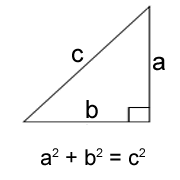
The path length measure is determined by measuring the total distance covered between release and arrival to the platform.
It uses the pythagorean distance between the scaled and transformed Cartesian coordinates. The path length is the sum of all segments.
See the main path length page for a full explanation of how path length is used and interpreted in Morris water maze analysis.
Date Published: February 1983
First implemented in HVS VP110 in 1983
Please cite this permalink in any publication using this measure
MLA. Baker, M. R. “What is the swim path length in Morris water maze?” Behavioral Tracking Knowledgebase., Feb. 1983 Web. 7 August 2017. https://hvsimage.com/path-length-in-morris-water-maze-analysis/
APA. Baker, M. R. (1983, Feb). What is the swim path length in Morris water maze? Retrieved from https://hvsimage.com/path-length-in-morris-water-maze-analysis/
Chicago Baker, Mark. “What is the swim path length in Morris water maze?”, HVSImage.com. https://hvsimage.com/path-length-in-morris-water-maze-analysis/ (accessed August, 7, 2017).
Platform Crossings in Morris Water Maze Analysis
Platform crossings are widely used as a measure of spatial memory in probe trials, being the number of the times the subject enters and re-enters the exact target location, when the platform itself has been removed.
See the main platform crossings page on how to use this measure, its limitations and the importance of using other complementary analyses.
Quadrant Preference in Morris Water Maze Analysis
The water maze pool is typically divided for some analyses into four quadrants, NE, SE, SW and NW, with North being the side of the pool at the top of the tracking system video image, and the top of path plots. The percentages of time and/or path spent in the target quadrant are widely used as basic measures of proximity to the target platform position.
HVS Image systems give the percentage time spent in each quad and percentage path in each quad. See the main page on quadrant measures to see how quadrant preference is used in Morris water maze analysis.
First implemented in HVS Image VP110 in 1985
Please cite this permalink in any publication using this measure
MLA. Hawthorne, E. L., & Baker, M. R. “What are the quadrant preference measures in Morris water maze?” Behavioral Tracking Knowledgebase., Aug. 2017 Web. 7 August 2017. https://hvsimage.com/preference-for-the-target-quadrant-in-morris-water-maze-analysis/
APA. Hawthorne, E. L., & Baker, M. R. (2017, Aug). What are the quadrant preference measures in Morris water maze? Retrieved from https://hvsimage.com/preference-for-the-target-quadrant-in-morris-water-maze-analysis/
Chicago Hawthorne, Elizabeth, & Baker, Mark. “What are the quadrant preference measures in Morris water maze?”, HVSImage.com. https://hvsimage.com/preference-for-the-target-quadrant-in-morris-water-maze-analysis/ (accessed August, 7, 2017).
Quadrant Entries
Quadrant entries are also used in HVS Image systems’ water maze analysis, including to quantify circling. The quads list is a list of quadrant entries in order, showing the extent to which the subject moved around the pool in a trial, including doubling back. In HVS Image systems the quads lists for each trial are saved as .qad text-files if the quads list box is checked.
See the main page on quadrant entries for how quadrant entries are used to understand behavior in Morris water maze.
First implemented in HVS Image VP-112 1988
Please cite this permalink in any publication using this measure
MLA. Hawthorne, E. L., & Baker, M. R. “What is the quads list in Morris water maze?” Behavioral Tracking Knowledgebase., Aug. 2017 Web. 7 August 2017. https://hvsimage.com/quadrant-entries-in-morris-water-maze-analysis/
APA. Hawthorne, E. L., & Baker, M. R. (2017, Aug). What is the quads list in Morris water maze? Retrieved from https://hvsimage.com/quadrant-entries-in-morris-water-maze-analysis/
Chicago Hawthorne, Elizabeth, & Baker, Mark. “What is the quads list in Morris water maze?”, HVSImage.com. https://hvsimage.com/quadrant-entries-in-morris-water-maze-analysis/ (accessed August, 7, 2017).
Path Efficiency Ratio
The path efficiency ratio, also known as the path ratio or path efficiency, gives the ratio of the optimal path from start to target to the actual path taken, to quantify the efficiency of the strategy pursued in reaching the platform. It’s defined as the actual path length divided by the direct path length. A direct (almost straight line) path from the start to the target has a path ratio close to 1.
Path ratio was introduced in the HVS Image system in June 2004 as part ofthe HVS user-response program, on request by Chris Janus, and has sometimes been known as the Janus ratio. See the main path ratio page for full information about the importance of using the path efficiency ratio to quantify spatial learning in Morris water maze analysis.
Please cite this link in any publication using this measure:
MLA. Baker, M. R. “What is the Path Efficiency Ratio in Water Maze?” Behavioral Tracking Knowledgebase., Aug. 2017. Web. 08 Aug 2017. https://hvsimage.com/path-efficiency-ratio-in-morris-water-maze-analysis/
APA. Baker, M. R. (2017, August). What is the Path Efficiency Ratio in Water Maze? Retrieved from https://hvsimage.com/path-efficiency-ratio-in-morris-water-maze-analysis/
Chicago Baker, Mark. “What is the Path Efficiency Ratio in Water Maze?”, HVSImage.com. https://hvsimage.com/path-efficiency-ratio-in-morris-water-maze-analysis/ (accessed August, 8, 2017).
Heading Angle or Heading Error
Heading (start-angle) is the starting direction relative to the ideal direction (i.e. direct to the center of the target platform location), in degrees. This is the direction from the start point (the first point on the path) to the point on the path to which the path length is a set percentage of the pool diameter. In HVS Image systems the percentage of pool radius can be adjusted by the user during analysis.
First implemented in HVS Image VP112 in 1987
See the main heading angle page for full information about how and why to use the heading angle in Morris water maze analysis.
Please cite this link in any publication using this measure
MLA. Hawthorne, E. L., & Baker, M. R. “What is the heading angle measure in Morris water maze?” Behavioral Tracking Knowledgebase., Aug. 2017 Web. 7 August 2017. https://hvsimage.com/heading-error-in-morris-water-maze-analysis/
APA. Hawthorne, E. L., & Baker, M. R. (20174, Aug). What is the heading angle measure in Morris water maze? Retrieved from https://hvsimage.com/heading-error-in-morris-water-maze-analysis/
Chicago Hawthorne, Elizabeth & Baker, Mark. “What is the heading angle measure in Morris water maze?”, HVSImage.com. https://hvsimage.com/heading-error-in-morris-water-maze-analysis/ (accessed August, 7, 2017).
Whishaw-Baker Corridor Test
Developed by the late Richard Baker at HVS Image, the Whishaw-Baker Corridor Test in Water Maze is a development of the Whishaw Corridor Test but handles any start point to any platform position, and normalizes the result to allow for different corridor areas.
See the main corridor test page for how and when to use the corridor test in Morris water maze analysis.
Please cite this link in any publication using this measure
MLA. Baker, M. R. “What is the Whishaw-Baker’s Corridor Test in Water Maze?” Behavioral Tracking Knowledgebase., Nov. 1997. Web. 31 May 2017. https://hvsimage.com/corridor-test-in-morris-water-maze/
APA. Baker, M. R. (1997, November). What is the Whishaw-Baker’s Corridor Test in Water Maze? Retrieved from https://hvsimage.com/corridor-test-in-morris-water-maze/
Chicago Baker, Mark. “What is the Whishaw-Baker’s Corridor Test in Water Maze?”, HVSImage.com. https://hvsimage.com/corridor-test-in-morris-water-maze/ (accessed May, 31, 2017).
Cone Test
The cone test gives measures of the extent to which the subject moved in the correct direction from the start point to the area of the target platform location, giving the percentages of the time and path that the subject spent in a 15 degree wedge that spreads from the start point to the target platform location. The use of the wedge shape in this test, unlike the parallel sided area of the corridor test, gives a consistent measure of how well the subject knows the direction towards the platform location regardless of its distance from the start point.
First implemented in HVS VP-112 1988
See the main cone test page for how and when to use the cone test in Morris water maze analysis.
Please cite this link in any publication using this measure
MLA. Hawthorne, E. L., & Baker, M. R. “What is the cone test in Morris water maze?” Behavioral Tracking Knowledgebase., Feb. 2004 Web. 7 August 2017. http://hvsimage.com/cone-test-in-morris-water-maze/
APA. Hawthorne, E. L., & Baker, M. R. (2004, Feb). What is the cone test in Morris water maze? Retrieved from http://hvsimage.com/cone-test-in-morris-water-maze/
Chicago Hawthorne, Elizabeth & Baker, Mark. “What is the cone test in Morris water maze?”, HVSImage.com. http://hvsimage.com/cone-test-in-morris-water-maze/ (accessed August, 7, 2017).
Close Encounter Measures in Morris Water Maze
The close encounter measure was first created for Dr Sarah Wong-Goodrich as part of the HVS Image user-response program, due to the observation that subjects often passed close to the platform location early in a trial and then did not return for some time. It was first implemented in the HVS Image 2020 classic system in 2005. The full set of close pass related measures are now used to capture near-miss spatial behavior not detected by conventional metrics. See how these measures are used on the main page for close encounter measures.
Please cite this link in any publication using the close pass measures:
MLA: Hawthorne, E. L., & Baker, M. R. “Close passes and close encounters in Morris water maze analysis” Behavioral Tracking Knowledgebase., Feb. 2004 Web. 7 August 2017. https://hvsimage.com/close-passes-in-morris-water-maze/
APA: Hawthorne, E. L., & Baker, M. R. (2004, Feb). Close passes and close encounters in Morris water maze analysis. Retrieved from https://hvsimage.com/close-passes-in-morris-water-maze/
Chicago: Hawthorne, Elizabeth, & Baker, Mark. “Close passes and close encounters in Morris water maze analysis”, HVSImage.com. https://hvsimage.com/close-passes-in-morris-water-maze/(accessed August, 7, 2017).
Gallagher Proximity Measures – Citation and Background
Origins and rationale
The Gallagher proximity measures were created for Michela Gallagher in 1998 as part of the HVS Image user-response program, following her 1993 paper, to provide a more sensitive assessment of spatial learning in the Morris water maze.
The key rationale for these measures is that subjects may reach the platform with relatively low latency or short path length without accurate knowledge of its location, for example by using sweeping or procedural search strategies.
Proximity measures address this limitation by quantifying how close the subject remains to the target location throughout the trial, providing a more direct measure of spatial accuracy. For how and why to use these measures, see the main page on Gallagher proximity measures.
Original measures
The original Gallagher measures, also known as the The Gallagher Learning Index, include:
Gallagher Global (Mean Proximity)
The average distance of the subject from the target location over the trial. This was primarily used in probe trials to assess spatial memory.
Gallagher Cumulative Proximity
The sum of distances from the target location across the trial, providing a measure of overall search error. This was commonly applied in learning trials.
These measures were calculated using time-averaged distance values and corrected for start-point differences to ensure comparability across trials.
Measurement considerations
Conventional measures such as time in target quadrant or platform crossings may fail to distinguish between:
- focused search near the target vs general presence in the correct quadrant
- accurate near-miss searching vs absence of spatial knowledge
Proximity measures overcome these limitations by capturing the spatial distribution of search behaviour across the entire trial.
Refinement in HVS Image systems
HVS Image systems extended the original proximity measures to take advantage of high-resolution automated tracking.
These refinements include:
- calculation based on continuous positional sampling rather than 1-second averages
- correction for start-point bias
- improved numerical precision at higher sampling rates
This led to the development of the Gallagher–Baker proximity indices, including:
Global Gallagher–Baker Proximity Index
A high-resolution equivalent of the original mean proximity measure, using every sample point for distance from platform, rather than 1 second averages.
Cumulative Gallagher–Baker Proximity Index
A refined cumulative distance measure adjusted for higher sampling frequency.
These provide more accurate and sensitive measures of spatial behaviour than the original implementations.
Temporal analysis (Gallagher by segment)
HVS Image systems also provide proximity data as a time series (“Gallagher by segment”), giving the average distance from the target for each time interval.
This enables:
- analysis of how search behavior evolves during a trial
- detection of early memory recall vs later search patterns
- identification of strategy shifts or extinction
Interpretation considerations
Proximity measures provide a more sensitive index of spatial learning than latency or quadrant measures, but should still be interpreted alongside complementary analyses (e.g. path efficiency, heading angle, and behavioral strategy classification).
How to cite this measure
If you use Gallagher proximity measures or their extensions in HVS Image systems, please cite:
Gallagher, M., Burwell, R., & Burchinal, M. (1993). Severity of spatial learning impairment in aging: Development of a learning index for performance in the Morris water maze.
Additional methodological development:
MLA: Hawthorne, E. L., & Baker, M. R. “What are the Gallagher-Baker indices in Water Maze?” Behavioral Tracking Knowledgebase., May. 2017. Web. 31 May 2017. https://hvsimage.com/the-gallagher-proximity-measures-in-morris-water-maze-analysis/
APA: Baker, M. R. (2017, May). What are the Gallagher-Baker indices in Water Maze? Retrieved from https://hvsimage.com/the-gallagher-proximity-measures-in-morris-water-maze-analysis/
Chicago: Hawthorne, Elizabeth & Baker, Mark. “What are the Gallagher-Baker indices in Water Maze?”, HVSImage.com. https://hvsimage.com/the-gallagher-proximity-measures-in-morris-water-maze-analysis/.
Circular Zones or Radii
The zones (A, B and C) are defined by two concentric circles between the center and edge of the water maze pool. Zone A is the area within the smallest circle, Zone C is that between the larger circle and the pool edge, and Zone B is the area between the two.
In HVS Image systems the zones may be set as equi-distant, in which case the divisions between each zone are one third of the pool radius apart, or equi-area, in which case the divisions between zones are such that the zones have the same area as each other. These circular zones are sometimes referred to as radii (or radiuses).
Learn more how and when to use equi-distant and equal area zones on the main page about circular zones in Morris water maze analysis.
Date Published: August 2017
First implemented in HVS VP-112 1988
Please cite this permalink in any publication using this measure
MLA. Hawthorne, E. L., & Baker, M. R. “What are zones in Morris water maze?” Behavioral Tracking Knowledgebase., Feb. 2004 Web. 7 August 2017. https://hvsimage.com/using-circular-zones-in-morris-water-maze-analysis/
APA. Hawthorne, E. L., & Baker, M. R. (2004, Feb). What are zones in Morris water maze? Retrieved from https://hvsimage.com/using-circular-zones-in-morris-water-maze-analysis/
Chicago Hawthorne, Elizabeth & Baker, Mark. “What are zones in Morris water maze?”, HVSImage.com. https://hvsimage.com/using-circular-zones-in-morris-water-maze-analysis/ (accessed August, 7, 2017).
Thigmotaxis Measures in Morris Water Maze Analysis
Thigmotaxis here means pool side-hugging. The thigmotaxis criterion is determined by the thigmotaxis radius to pool radius ratio. For details of how and when to use the thigmotaxis measures see https://hvsimage.com/thigmotaxis-in-morris-water-maze-analysis/.
Date Published: February 2004
First implemented in HVS Image 2020 in 2004
Please cite this permalink in any publication using this measure
MLA. Baker, M. R. “What are the Thigmotaxis Measures in Water Maze?” Behavioral Tracking Knowledgebase., Feb. 2004 Web. 7 August 2017. https://hvsimage.com/thigmotaxis-in-morris-water-maze-analysis/
APA. Baker, M. R. (2004, Feb). What are the Thigmotaxis Measures in Water Maze? Retrieved from https://hvsimage.com/thigmotaxis-in-morris-water-maze-analysis/
Chicago Baker, Mark. “What are the Thigmotaxis Measures in Water Maze?”, HVSImage.com. https://hvsimage.com/thigmotaxis-in-morris-water-maze-analysis/ (accessed August, 7, 2017).
Circling and Chaining in Morris Water Maze Analysis
Pool circling measures all complete loops that enclose the pool-center. (Doubling-back does not affect the number of circlings and can be seen in the quads list.)
Pool circling is a useful indication of search strategy, and may precede chaining. See the main page on chaining to see how the circling and chaining metrics reveal behavior and strategy in Morris water maze.
Circling first implemented in HVS Image VP-112 1988
Please cite this permalink in any publication using this measure
MLA. Hawthorne, E. L., & Baker, M. R. “What is the pool circling measure in Morris water maze?” Behavioral Tracking Knowledgebase., Feb. 2004 Web. 7 August 2017. https://hvsimage.com/chaining-in-morris-water-maze/
APA. Hawthorne, E. L., & Baker, M. R. (2004, Feb). What is the pool circling measure in Morris water maze? Retrieved from https://hvsimage.com/chaining-in-morris-water-maze/
Chicago Hawthorne, Elizabeth, & Baker, Mark. “What is the pool circling measure in Morris water maze?”, HVSImage.com. https://hvsimage.com/chaining-in-morris-water-maze/ (accessed August, 7, 2017).
Average Speed in Morris Water Maze Analysis
Average speed is a measure determined by measuring the total distance covered between release and arrival to the platform and dividing by time elapsed to achieve that goal. Distance is the pythagorean distance between the scaled and transformed Cartesian coordinates while the time is determined either through real time cross checking of system clock measurements with hardware based marker measurements.
See also ‘active speed’ below, and the main page on swim speed for details on the role of the speed metrics in Morris water maze analysis.
Please cite this permalink in any publication using this measure
MLA. Baker, M. R. “How is average speed defined in Morris water maze?” Behavioral Tracking Knowledgebase., Feb. 2004 Web. 7 August 2017. https://hvsimage.com/swim-speed-in-morris-water-maze-analysis/
APA. Baker, M. R. (2004, Feb). How is average speed defined in Morris water maze? Retrieved from https://hvsimage.com/swim-speed-in-morris-water-maze-analysis/
Chicago Baker, Mark. “How is average speed defined in Morris water maze?”, HVSImage.com. https://hvsimage.com/swim-speed-in-morris-water-maze-analysis/ (accessed August, 7, 2017).
Active Speed in Morris Water Maze Analysis
Active speed is the average speed excluding floating. Active speed is a measure determined by measuring only the segments of path that are covered above a threshold velocity (defined as the inactivity, slow swim or float threshold) and dividing by the time it takes to traverse those sections.
See also ‘aerage speed’ above, and the main page on swim speed for details on the role of the speed metrics in Morris water maze analysis.
First implemented in HVS Image VP110 in 1983
Please cite this permalink in any publication using this measure
MLA. Baker, M. R. “What is the active speed measure in Morris water maze?” Behavioral Tracking Knowledgebase., Aug. 2017 Web. 7 August 2017. https://hvsimage.com/swim-speed-in-morris-water-maze-analysis/
APA. Baker, M. R. (2017, Aug). What is the active speed measure in Morris water maze? Retrieved from https://hvsimage.com/swim-speed-in-morris-water-maze-analysis/
Chicago Baker, Mark. “What is the active speed measure in Morris water maze?”, HVSImage.com. https://hvsimage.com/swim-speed-in-morris-water-maze-analysis/ (accessed August, 7, 2017).
Inactivity, Slow Swim or Floating in Morris Water Maze Analysis
Rodents sometimes float passively without attempting to swim to the platform, and humans in the VR water maze sometimes hesitate or stop moving for periods of time. The inactivity or floating measure, sometimes called slow swim, is a measure determined by how many 100ms segments of raw, unfiltered data have an average velocity (as determined by the time and the pythagorean distance between the scaled and transformed cartesian coordinates) that falls below a predetermined threshold. A typical threshold would be 0.05 meters per second. In HVS Image systems this threshold can be adjusted by the user during data analysis.
See the main page on inactivity for details of the importance of floating and inactivity in Morris water maze analysis.
First implemented in HVS Image VP110 in 1983.
Please cite this permalink in any publication using this measure
MLA. Baker, M. R. “How do you quantify floating in Water Maze?” Behavioral Tracking Knowledgebase., Aug. 2017 Web. 7 August 2017. https://hvsimage.com/floating-or-inactivity-in-morris-water-maze-analysis/
APA. Baker, M. R. (2017, Aug). How do you quantify floating in Water Maze? Retrieved from https://hvsimage.com/floating-or-inactivity-in-morris-water-maze-analysis/
Chicago Baker, Mark. “How do you quantify floating in Water Maze?”, HVSImage.com. https://hvsimage.com/floating-or-inactivity-in-morris-water-maze-analysis/
Time Slices
Time slices (or temporal slices) allow analysis of a sub-set of the water maze trace. The start time of the slice and the duration of the slice are set in seconds.
Implemented in HVS Image 2020 in 2004
For further information see the main page about how and when to use time slices in Morris water maze analysis.
Please cite this link in any publication using this measure:
MLA. Hawthorne, E. L., & Baker, M. R. “What are temporal slices in Morris water maze?” Behavioral Tracking Knowledgebase., Aug, 2017 Web. 7 August 2017. http://hvsimage.com/time-slices-in-morris-water-maze-analysis/
APA. Hawthorne, E. L., & Baker, M. R. (2017, Aug). What are temporal slices in Morris water maze? Retrieved from http://hvsimage.com/time-slices-in-morris-water-maze-analysis/
Chicago Hawthorne, Elizabeth, & Baker, Mark. “What are temporal slices in Morris water maze?”, HVSImage.com. http://hvsimage.com/time-slices-in-morris-water-maze-analysis/ (accessed August, 7, 2017).